


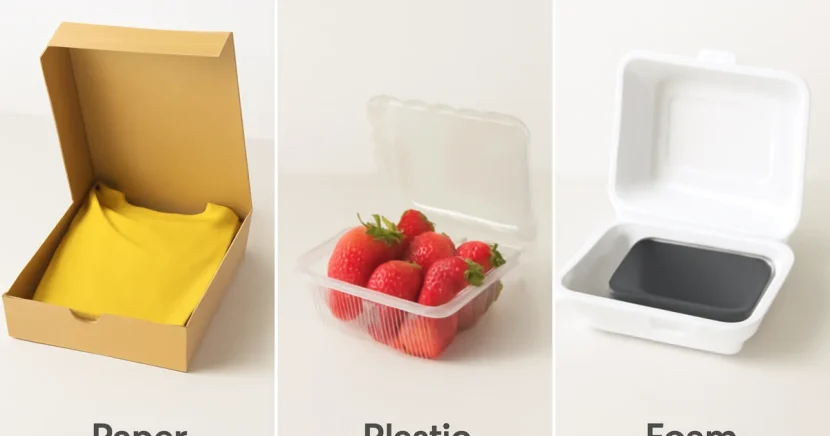
When it comes to securing your products for storage, transport, or export, choosing the right packaging is crucial. For Malaysian manufacturers, exporters, and logistics professionals, the decision often comes down to three main materials: paper boxes, plastic boxes, and foam packaging. Each material offers unique benefits and drawbacks, and the best solution depends on your product type, industry requirements, and business goals. This comprehensive comparison will help you decide which packaging option suits your needs best.
Understanding Your Packaging Needs
Before choosing a packaging material, it’s vital to assess your operational requirements. Are you shipping sensitive electronics, automotive parts, fragile goods, or high-volume products? Consider factors such as:
- Product fragility and weight
- Required protection against moisture, static, or impact
- Export compliance and international standards
- Storage and handling conditions
- Sustainability and recycling goals
- Budget constraints and total cost of ownership
Let’s break down how paper boxes, plastic boxes, and foam packaging perform across these criteria.
Paper Box Packaging: Advantages and Limitations
Paper boxes are a time-tested solution for various industries in Malaysia. They come in single, double, and triple-wall constructions and can be custom-shaped into boxes, partitions, and trays.
Advantages
- Cost-effective: Paper boxes are generally affordable, especially for high-volume orders.
- Customisable: Easily printed, die-cut, and sized for different product types.
- Recyclable & Sustainable: Made from renewable resources, they are easily recycled and often preferred by export markets with green requirements.
- Good stacking strength: Ideal for warehousing and transport of boxed goods.
Limitations
- Limited moisture resistance: Susceptible to damage in humid conditions unless laminated or treated.
- Lower impact protection: Offers basic cushioning but less effective for shock-sensitive or fragile items.
- Weaker for heavy loads: May deform or collapse under very high weight or pressure.
Practical Example: A Penang-based electronics exporter might use triple-wall paper boxes with internal partitions for non-sensitive components, balancing cost and protection for local and regional shipments.
Plastic Box Packaging: Strength, Durability, and Reusability
Plastic boxes are popular for their strength, repeat use, and resistance to environmental factors. They can be made from corrugated or solid plastic sheets, offering options for both light-duty and heavy-duty applications.
Superior durability
- Superior durability: Resistant to water, chemicals, and impact, making them ideal for demanding industrial and logistics applications.
- Reusable: Excellent for closed-loop systems, repeated shipping, or in-house material flow.
- ESD & Antistatic Options: Critical for electronics and semiconductor manufacturers to protect sensitive parts from static discharge.
- Easy to clean: Suitable for food, medical, and cleanroom uses.
Higher initial cost
- Higher initial cost: Generally more expensive upfront compared to single-use paper boxes.
- Recycling complexity: Not all plastics are easily recycled; facilities may be limited in some Malaysian regions.
- Storage space: Sturdy construction can take up more space when not in use, unless designed for nesting or folding.
Practical Example: Automotive suppliers may deploy custom-moulded plastic trays for parts shipments between factories, leveraging reusability and consistent part protection.
Foam Packaging: Maximum Protection for Sensitive Products
Foam packaging—including EPE (Expanded Polyethylene), EPP (Expanded Polypropylene), and polystyrene—offers superior cushioning and tailored protection for high-value or delicate products.
Excellent shock absorption
- Excellent shock absorption: Foam cradles products and prevents transit damage, essential for electronics, medical devices, and precision instruments.
- Customisable shapes: Can be moulded or fabricated to fit any product, from microchips to heavy machinery parts.
- Moisture & chemical resistance: EPE and EPP solutions are resilient in humid and challenging environments.
- Lightweight: Minimises shipping weight and costs.
Single-use tendency
- Single-use tendency: Some foam types (like polystyrene) are usually discarded after delivery, though EPE and EPP can be reused.
- Environmental concerns: Not all foams are biodegradable or widely recycled, though EPE foam recycling is improving in Malaysia.
- Higher per-unit cost: Custom foam solutions can be more expensive for low-volume or one-off shipments.
Practical Example: A semiconductor manufacturer uses ESD-safe EPE foam trays for ICs and chips, ensuring protection from both static and impact during export.
Cost Comparison: Total Cost of Ownership
While paper boxes often win on initial price, plastic and foam packaging may offer better value over time, especially in reusable or high-protection scenarios.
- Paper boxes: Low cost per unit, but may require secondary packaging for fragile goods or wet environments.
- Plastic boxes: Higher upfront investment, but cost-effective for repeated use and lower damage rates.
- Foam packaging: Usually an add-on cost, but can significantly reduce product loss or warranty claims for sensitive items.
Evaluate not only the purchase price, but also the reduction in product returns, damage, and customer complaints when selecting your packaging solution.
Sustainability and Compliance: Meeting Modern Expectations
Modern businesses face increasing scrutiny regarding their environmental impact. Exporters in Malaysia must also comply with international standards for packaging materials, including ISPM 15 for wooden packaging and recycling mandates for plastics and paper.
- Paper: Renewable, biodegradable, and widely recycled. Favoured for green branding and compliance.
- Plastic: Reusable, but recycling depends on material type and local facilities. Look for recyclable or recycled-content plastics.
- Foam: EPE and EPP foams are increasingly recyclable, but polystyrene remains a challenge. Consider local recycling programs when planning your packaging.
Engaging a packaging partner who understands these requirements—like EPE Packaging—can ensure your business remains compliant and sustainable.
Protective Performance: Shock, Moisture, and Static Control
For fragile, high-value, or high-tech products, protection against shock, vibration, static, and moisture is paramount.
- Paper boxes: Offer basic protection, best when combined with inserts or wraps.
- Plastic boxes: Strong against impact and moisture; ESD-safe variants protect electronics.
- Foam packaging: Unmatched for cushioning and tailored protection. EPE and EPP foams resist moisture and static, ideal for electronics and precision goods.
For more on why protective packaging matters, see our article on 4 Main Reasons Why You Should Start Using Protective Packaging In Shipping.
Practical Considerations: Supply, Local Sourcing & Logistics
Availability and supply chain efficiency are key for Malaysian manufacturers. Whether you are looking for “packing near me” or a reliable plastic packaging supplier near me, the local presence of your packaging partner matters.
- Paper boxes: Widely available across Malaysia, with quick lead times for standard sizes.
- Plastic boxes: Sourcing may require specialist suppliers, especially for custom or ESD-safe solutions.
- Foam packaging: Custom foam solutions (such as EPE foam or polystyrene box) require expertise and local manufacturing capacity.
Choosing a partner like EPE Packaging, with facilities in Penang, Shah Alam, and Johor, ensures rapid delivery and local support for all major packaging formats.
Industrial Packaging Malaysia: Challenges, Trends, and Innovations
The Malaysian packaging sector is evolving rapidly, driven by growth in electronics, automotive, medical devices, and e-commerce. Industrial Packaging Malaysia now faces new challenges and opportunities as companies strive for higher efficiency and compliance. Some current trends and innovations include:
- Smart Packaging: The integration of RFID tags and QR codes for real-time tracking and inventory management, reducing losses and improving traceability.
- Eco-Friendly Materials: Growing demand for biodegradable, compostable, or recycled packaging materials as businesses address both local and international sustainability standards.
- Automation and Customisation: Automated packaging lines and on-demand custom packaging designs are streamlining production and improving consistency.
- Protective Engineering: Advances in foam formulation, multi-material combinations, and engineered inserts are enhancing protection for high-value goods.
- Export-Ready Solutions: Custom packaging to meet specific international regulations, including ISPM 15 for wood and RoHS for electronics, is increasingly sought after by Malaysian exporters.
By staying ahead of these trends and working with innovative suppliers, businesses can maintain a competitive edge and ensure their products are protected and compliant throughout the supply chain.
Real-World Scenarios: Choosing the Right Packaging for Different Industries
Let’s examine how paper, plastic, and foam packaging solutions are used in practical business situations across Malaysia:
- Electronics Exporter: A Johor-based electronics manufacturer ships sensitive PCBs worldwide. They use a combination of ESD-safe foam trays inside corrugated paper boxes, balancing regulatory compliance, anti-static protection, and cost control.
- Automotive Supplier: A Selangor automotive parts supplier moves components between factories. They invest in reusable, stackable plastic boxes with custom partitions, reducing packaging waste and lowering long-term costs.
- Medical Device Producer: A Penang medical device company relies on custom-moulded EPE foam inserts within plastic boxes for sterile, impact-resistant packaging that meets international safety requirements.
- E-commerce Retailer: A Kuala Lumpur online retailer uses double-wall paper boxes with bubble wrap for non-fragile items and foam inserts for high-value or breakable goods, optimising both protection and delivery costs.
- Industrial Exporter: An industrial equipment exporter combines heavy-duty triple-wall paper boxes with machine-cut foam inserts for shipping machinery to Europe, ensuring compliance with both strength and sustainability mandates.
Each scenario highlights the importance of matching packaging material and design to product needs, regulatory requirements, and budgetary constraints.
Common Mistakes to Avoid in Packaging Selection
Even experienced professionals can make costly errors when specifying packaging. Here are some common mistakes and how to avoid them:
- Underestimating Product Vulnerability: Choosing basic paper boxes for fragile or high-tech items without adequate internal protection can lead to damage and returns.
- Ignoring Export Regulations: Failing to comply with international packaging rules (like ISPM 15 or RoHS) can result in shipment delays or rejections.
- Not Factoring in Reusability: Focusing on lowest upfront cost instead of considering reusable options like plastic boxes may increase long-term expenses.
- Overlooking Local Supply Chains: Selecting packaging that is not readily available locally can cause supply chain disruptions and higher logistics costs.
- Neglecting Sustainability: Ignoring recycling and eco-friendly options may damage your brand reputation and restrict access to green-conscious markets.
Working with an experienced packaging partner can help you identify and avoid these pitfalls, ensuring both operational efficiency and product safety.
Step-by-Step Packaging Selection Checklist
To streamline your decision process, follow this practical checklist when choosing between paper, plastic, and foam packaging:
- Assess your product’s fragility, weight, and dimensions.
- Define handling, shipping, and storage conditions (e.g., moisture, static risk, stacking needs).
- List regulatory and export compliance requirements for your destination markets.
- Evaluate sustainability goals and customer expectations regarding recyclability.
- Calculate total cost of ownership, including reuse potential and damage rates.
- Check the availability and lead time of each packaging option with local suppliers.
- Request samples and conduct real-world packaging tests (drop, vibration, moisture, etc.).
- Review integrated solutions (e.g., foam inserts in paper or plastic boxes) for optimal performance.
- Document results and adjust your packaging plan as your business evolves.
This methodical approach reduces risk, controls costs, and ensures your packaging is fit for purpose—whether you need large-scale Industrial Packaging Malaysia or specialised export-ready kits.
How to Decide: Matching Packaging to Your Business Needs
To make the best choice, weigh your requirements and priorities:
- For low-cost, high-volume, and export-friendly needs: Paper boxes are a solid choice, especially for non-fragile items.
- For durability, reusability, and special handling (e.g., ESD): Plastic boxes excel, especially for in-plant logistics and automotive or electronic parts.
- For delicate, high-value, or precision products: Foam packaging, particularly EPE foam, provides the highest level of protection.
Integrated solutions are also possible—using foam inserts inside plastic or paper boxes, for example, to maximise both protection and cost-effectiveness.
If you’re uncertain, consult with an experienced provider. EPE Packaging can design, test, and deliver tailor-made Protective Packaging Malaysia solutions to suit any need, from export pallets to ESD trays and custom foam sets.
Conclusion: Choose Smart, Protect Your Products, Grow Your Business
The right packaging material can make a significant difference in product safety, customer satisfaction, and operational efficiency. Paper, plastic, and foam packaging each have their place in the Malaysian industrial landscape. By understanding their strengths and limitations—and working with a trusted partner—you can confidently select the best packaging for your business goals.
Ready to upgrade your packaging? Explore all your options and ensure every shipment arrives safely and efficiently.
Frequently Asked Questions
What are the main differences between paper box, plastic box, and foam packaging?
Paper boxes are cost-effective, recyclable, and ideal for low to moderate protection needs, but offer limited moisture and impact resistance. Plastic boxes are durable, reusable, moisture-resistant, and available with ESD protection, but come at a higher upfront cost. Foam packaging, such as EPE or EPP foam, provides maximum shock absorption and custom fit for fragile or sensitive products, but may be single-use and have recycling challenges.
Which packaging material is best for exporting electronics from Malaysia?
For electronics, a combination of ESD-safe foam inserts (such as EPE foam) inside a paper or plastic box is recommended. This approach balances anti-static protection, shock absorption, and compliance with export requirements.
Are plastic packaging boxes recyclable in Malaysia?
Some plastics used in packaging are recyclable, but recycling options depend on the type of plastic and local facilities. It’s best to check with your packaging supplier and local recycling programs to ensure proper disposal or recycling.
Is foam packaging environmentally friendly?
Traditional foams like polystyrene are not biodegradable and are harder to recycle. However, EPE and EPP foams are increasingly recyclable, and some local programs in Malaysia accept them. Always consider local recycling capabilities and sustainable alternatives.
How do I choose the right packaging for my business?
Assess your product’s fragility, shipping and storage conditions, compliance needs, and sustainability goals. Calculate both upfront and long-term costs, and consult with a packaging expert like EPE Packaging for tailored solutions, samples, and real-world testing.
Can I use integrated packaging solutions (like foam inside boxes)?
Yes, integrated solutions—such as foam inserts within paper or plastic boxes—are common for maximizing both protection and cost-effectiveness, especially for high-value or fragile products.
What are the most common mistakes in packaging selection?
Common mistakes include underestimating product vulnerability, ignoring export regulations, not considering reusability, overlooking local supply chains, and neglecting sustainability. Working with an experienced supplier helps avoid these pitfalls.
Why Choose EPE Packaging?
EPE Packaging helps readers take action after learning about Compare: Paper Box vs. Plastic Box vs. Foam Packaging – Which Is Best for Your Malaysian Business?.
1. EPE & EPP Foam Packaging – Custom fabricated and moulded polyethylene and polypropylene foam packaging designed to cushion products and protect them against shock during handling and transportation.
2. Paper Box Packaging – Single, double and triple-wall paper board solutions converted into boxes, partitions, trays and cushioning for various industrial and commercial packaging applications.
3. Plastic Boxes & Trays – Corrugated and solid plastic sheet packaging manufactured into reusable boxes, trays and partitions, including ESD options for sensitive electronic components.
4. Protective Bags & Wraps – Custom-sized LDPE, PVC, aluminium, polyethylene, antistatic, static-shielding and moisture-barrier bags for additional product protection during storage and shipping.
5. Pallets & Industrial Packaging – Wood, paper and plastic pallet solutions designed according to product weight, handling requirements, logistics conditions and customers’ packaging budgets.
6. Integrated Packaging Solutions – Complete packaging kits combining foam, paper board, plastic, wood, pallets and other accessories to simplify customers’ packing and sourcing processes.
7. Packaging Design & Testing – Professional packaging design, prototyping and testing services to develop protective packaging suitable for actual transportation, handling and storage conditions.
8. Warehousing & Delivery Services – Complete packaging support covering production, quality control, storage, recycling and delivery, including logistics and JIT/VMI supply arrangements. 1. Total Packaging Solution Provider – Customers can obtain packaging design, testing, production, QC, storage, recycling and delivery services through one integrated packaging partner.
2. Established Since 1994 – EPE Packaging Malaysia has operated for more than three decades, providing substantial experience in industrial and protective packaging applications.
3. International Group Support – The company is a member of EPE International, headquartered in Tokyo, providing access to an international packaging network covering multiple global markets.
4. Strong Malaysian Presence – Factories in Penang, Shah Alam and Johor allow the company to support manufacturers and industrial customers across Malaysia more efficiently.
5. Custom Packaging Capability – Packaging can be designed and manufactured according to specific product dimensions, protection requirements, handling conditions and production volumes.
6. Wide Material Selection – EPE combines foam, plastic, paper board, wood, pallets, protective bags and specialised accessories to develop packaging around different product requirements.
7. JIT & VMI Delivery Support – Integrated kitting together with Just-in-Time and Vendor Managed Inventory delivery services helps customers reduce packaging inventory and sourcing complexity.
8. Sensitive Product Protection – Antistatic, ESD, moisture-barrier and specialised cushioning options make the company’s solutions suitable for electronics and other sensitive industrial products.