


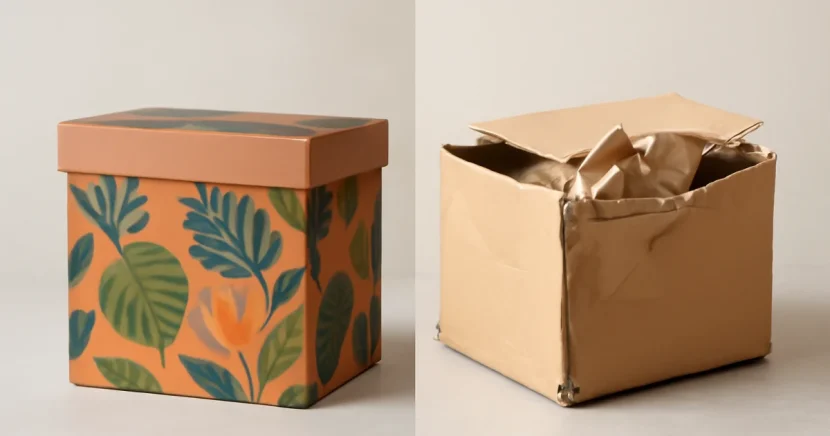
Customised packaging is a key investment for manufacturers and exporters in Malaysia, from electronics to automotive and industrial sectors. However, even large and experienced companies can fall into costly traps during the packaging development process. In this comprehensive guide, we explore the most common mistakes Malaysian businesses make when customising packaging, why they happen, and how to avoid them. We’ll share real-world insights drawn from decades of packaging experience to help you achieve the right protection, efficiency, and brand value for your products.
Why Custom Packaging Matters for Malaysian Businesses
In today’s competitive manufacturing and export landscape, packaging plays a pivotal role well beyond just containing products. Custom packaging protects sensitive components, supports efficient logistics, meets export regulations, and enhances brand perception. For businesses dealing with electronics, automotive assemblies, industrial components, or fragile goods, the right packaging can mean the difference between a successful shipment and expensive losses.
Yet, many firms underestimate the complexity involved. Custom Packaging Malaysia is not a one-size-fits-all process. It requires careful planning, technical understanding, and collaboration with experienced packaging partners. Let’s examine where things often go wrong—and how your business can get it right.
1. Overlooking Product and Logistics Requirements
Mistake: Many companies begin the packaging process without a thorough understanding of their products’ protection needs or the logistics conditions they will face. This can lead to solutions that are either over-engineered (wasting money and resources) or, more dangerously, under-protective (causing product damage in transit).
Real Scenario: An electronics manufacturer in Penang selected standard-sized EPE foam trays for their components, assuming basic cushioning was sufficient. However, their products were shipped internationally by air and sea, exposed to rough handling, vibration, and moisture. Without moisture barriers or anti-static properties, the components arrived damaged, resulting in costly returns and lost customer trust.
How to Avoid:
- Conduct a detailed assessment of your product dimensions, fragility, ESD sensitivity, moisture vulnerability, and weight.
- Work with your packaging supplier to simulate real logistics conditions: stacking, vibration, temperature, humidity, and potential impacts.
- Request packaging prototypes and testing under actual transport scenarios before committing to full-scale production.
For more on choosing the right packaging supplier, see The Importance Of Choosing The Right Packaging Supplier In Malaysia.
Additional Factors to Consider
- Map your entire logistics chain: Are your shipments exposed to long storage times, multiple handling points, or extreme climate variations? Each stage increases risk and should inform your packaging choices.
- Assess the impact of multi-modal transport. Goods transferred between trucks, ships, and warehouses face a higher chance of being dropped or stacked incorrectly.
- Consider the total cost of ownership: The cheapest packaging upfront may lead to higher costs through damages, insurance claims, and dissatisfied customers.
2. Failing to Communicate Critical Details Early
Mistake: In many projects, important product changes or handling requirements are communicated late in the process, forcing last-minute packaging adjustments or, worse, leading to packaging that no longer fits the actual product.
Real Scenario: A Penang-based automotive supplier updated their component design after packaging samples were already produced. The new parts had sharper edges and a slightly larger size. Since the packaging supplier was not informed in time, the delivered foam inserts caused tight fits, scuffing, and assembly delays on the customer’s line.
How to Avoid:
- Establish a clear communication protocol with your packaging partner from the project’s outset.
- Share finalised product drawings, tolerances, and any expected design changes early.
- Schedule regular updates and design reviews involving both engineering and packaging teams before final approval.
Communication breakdowns are a top cause of packaging launches gone wrong. Keep all stakeholders—engineering, purchasing, production, and your packaging supplier—informed of any change requests or late adjustments. A single overlooked modification can ripple through your supply chain, causing delays or costly rework.
3. Ignoring Regulatory and Export Compliance
Mistake: Overlooking international export requirements, such as ISPM 15 for wood packaging, can lead to customs delays, fines, or rejected shipments.
Real Scenario: A Malaysian manufacturer shipped electronics to Europe using untreated wooden pallets and crates. At the receiving port, customs officials flagged the packaging for non-compliance with international phytosanitary standards. The entire shipment was delayed for weeks, incurring significant demurrage fees and risking customer relationships.
How to Avoid:
- Clarify all destination country packaging regulations (e.g., ISPM 15, RoHS, REACH) with your packaging provider.
- Request documentation and certification for treated pallets, ESD materials, and any required labelling.
- Integrate export compliance checks into your packaging approval workflow.
For more on export-ready packaging solutions, see 4 Main Reasons Why You Should Start Using Protective Packaging In Shipping.
Checklist: Staying Compliant with Packaging Regulations
- Keep updated on evolving standards—regulations change and non-compliant packaging can trigger penalties or shipment refusals.
- Confirm with your logistics provider or freight forwarder if special documentation or markings are required for certain destinations.
- Maintain a compliance file for each product line, including all certification documents and inspection reports for audit purposes.
4. Underestimating the Value of Professional Packaging Design
Mistake: Trying to save costs by using generic or self-designed packaging often backfires, especially for delicate, high-value, or irregularly shaped products.
Real Scenario: An industrial manufacturer opted to design their own paperboard boxes for a heavy machine component to save on design fees. During shipment, the boxes failed under the component’s weight and stacking pressure. The resulting damage far exceeded the minimal savings from skipping professional design.
How to Avoid:
- Engage packaging engineers for design, prototyping, and testing—especially for non-standard products.
- Leverage materials expertise from suppliers with experience in EPE, EPP foam, plastic trays, and pallets suitable for your sector.
- Invest in upfront design to minimise downstream losses and returns.
Professional packaging design is not just about aesthetics. It ensures optimal fit, protection, and efficient use of materials, and it supports automation on your production line. Involve your packaging partner early in the product development process for the best results. A well-designed package can also reduce storage and shipping costs by optimizing stackability and space utilization.
Learn more in How To Choose The Right Packaging Company In Penang For Your Business.
5. Choosing the Wrong Materials for the Application
Mistake: Selecting packaging materials based solely on price or availability, rather than performance, can expose products to damage or compliance failures.
Real Scenario: A high-value electronics exporter chose basic corrugated boxes and standard foam as a cost-saving measure, ignoring the need for ESD-safe and moisture-resistant options. When the shipment arrived, several units suffered static discharge damage, leading to a costly recall.
How to Avoid:
- Discuss with your supplier the exact requirements: antistatic, moisture barrier, cushioning level, heat resistance, and recyclability.
- Ask for samples of EPE foam, EPP foam, custom polystyrene, and plastic packaging to evaluate fit and function.
- Request case studies or references for similar projects.
Material Selection: Questions to Ask
- How will your products be handled and stored—indoors or outdoors, climate-controlled or exposed to humidity?
- Is there a need for anti-static protection, temperature resistance, or tamper-evident sealing?
- Are your customers requesting sustainable or recyclable packaging materials?
- Do you have a plan for end-of-life disposal or recycling of packaging?
Better material selection can also reduce your environmental impact and enhance your brand reputation, especially as more buyers demand eco-friendly packaging solutions.
6. Overlooking Scalability and Inventory Management
Mistake: Focusing only on initial packaging needs without planning for production scale-up, warehousing, or just-in-time delivery can result in costly storage, supply chain delays, or stockouts.
Real Scenario: A multinational electronics firm ordered a single large batch of custom packaging, only to find that their production ramp-up required more frequent deliveries and different packaging configurations. Without a scalable packaging and inventory system, they faced bottlenecks and increased logistics costs.
How to Avoid:
- Work with packaging partners offering integrated warehousing, JIT, or Vendor Managed Inventory (VMI) solutions.
- Plan for flexibility in packaging sizes and order quantities as your production grows.
- Review your supplier’s logistics and delivery capabilities to ensure they can support your expansion.
Managing Packaging as You Grow
- Set up periodic reviews with your packaging supplier to assess changing needs.
- Monitor packaging inventory alongside your finished goods to spot trends or upcoming shortages.
- Automate reorder points and alerts for critical packaging SKUs based on sales or production data.
Scalable packaging management ensures you maintain a reliable supply without over-investing in stock, helping you stay agile as your business grows.
7. Neglecting Branding and User Experience
Mistake: Ignoring the brand image and end-user experience can diminish your product’s perceived value and open the door for competitors.
Real Scenario: An export-oriented Malaysian company shipped precision instruments in plain packaging with minimal branding. Customers reported difficulty in unpacking and a lack of confidence in the product’s premium quality, despite its technical excellence.
How to Avoid:
- Incorporate branding elements, clear labelling, and user-friendly unpacking features in your packaging design.
- Balance brand presentation with functional protection and export requirements.
- Solicit feedback from end users on packaging usability and perceived quality.
Strong packaging design should enhance the overall customer experience. Consider easy-open features, instructions, and branding that reinforces your value proposition. Well-designed packaging influences repurchase decisions and positive reviews, especially in competitive export markets. Remember, packaging is often the first physical interaction customers have with your brand.
8. Not Partnering with an Experienced Packaging Supplier
Mistake: Choosing suppliers solely based on cost or proximity (“packing near me” or “plastic packaging supplier near me”) without evaluating technical expertise, quality systems, or support capabilities can result in poor outcomes.
Real Scenario: A high-volume manufacturer switched to a cheaper local supplier for packaging boxes but soon encountered inconsistent quality, missed deadlines, and lack of technical support. The result was frequent line stoppages and increased rework costs.
How to Avoid:
- Assess potential suppliers for their experience, certifications, customer support, and ability to provide end-to-end solutions.
- Ask about their track record with EPE foam manufacturers, custom polystyrene, plastic pallets, and export packaging projects.
- Visit supplier facilities if possible to verify capabilities.
For a deeper dive into supplier evaluation, read 6 Factors To Consider When Choosing A Penang Packaging Manufacturer For Your Business.
Building a Long-Term Packaging Partnership
- Choose suppliers who provide technical input, rapid prototyping, and after-sales support—not just the lowest price.
- Look for established companies with ISO certifications and a proven track record across sectors.
- Consider the value of integrated services, such as design, warehousing, and logistics, to streamline your supply chain.
Conclusion: Setting Up for Packaging Success
The journey to effective custom packaging in Malaysia is filled with potential pitfalls, but every mistake is avoidable with the right approach. By thoroughly understanding your product and logistics needs, communicating clearly with your packaging partner, ensuring regulatory compliance, and investing in professional design and materials, you set your business up for long-term success. Remember, packaging is not just a cost—it’s a strategic investment in your product’s safety, your brand, and your customer’s satisfaction.
Ready to avoid these mistakes and achieve packaging excellence? Partnering with an established provider like EPE Packaging gives you access to decades of experience, a wide range of materials (including EPE, EPP foam, plastic, paper and pallets), and fully integrated packaging, warehousing, and delivery solutions for Malaysian businesses of all sizes.
Frequently Asked Questions
Where can I get packaging boxes near me in Malaysia?
You can source packaging boxes from established suppliers like EPE Packaging, which operates factories in Penang, Shah Alam, and Johor. Working with a local packaging partner ensures faster lead times, better support, and custom solutions tailored to your business needs.
What is the most common mistake when customising packaging for electronics?
A key mistake is underestimating the need for ESD (Electrostatic Discharge) protection and moisture barriers. Electronics are highly sensitive, and standard packaging may not provide adequate protection. Partner with suppliers experienced in antistatic and moisture-resistant materials such as EPE foam and request proper testing before bulk orders.
How do I ensure my packaging meets export regulations?
Start by confirming all destination country requirements, like ISPM 15 for wooden pallets or RoHS compliance for electronics. Request certification documents from your packaging supplier and integrate compliance checks into your approval process to avoid customs delays or penalties.
What materials are best for protective packaging in Malaysia’s climate?
Materials like EPE and EPP foam offer excellent cushioning, while plastic, aluminium, and moisture-barrier bags protect against humidity. For export, heat-treated wooden pallets are essential. The right choice depends on your product, destination, and handling conditions—consult your supplier for tailored recommendations.
Why is professional packaging design important?
Professional design ensures that packaging fits your product precisely, meets safety and regulatory requirements, and optimises material use. It prevents costly damage, reduces waste, and enhances your brand’s presentation. Investing in expert design services pays off in fewer returns and greater customer satisfaction.
Avoid Costly Packaging Mistakes—Partner with EPE Packaging Today
Don’t let common packaging pitfalls impact your business. With over 30 years of experience, EPE Packaging offers complete solutions—from custom design and materials selection to integrated warehousing and just-in-time delivery. Whether you need EPE foam, plastic boxes, pallets, or export-ready kits, our experts ensure your products are protected and your packaging process runs smoothly. Get in touch to discuss your project and discover how we can help you achieve packaging excellence in Malaysia.