


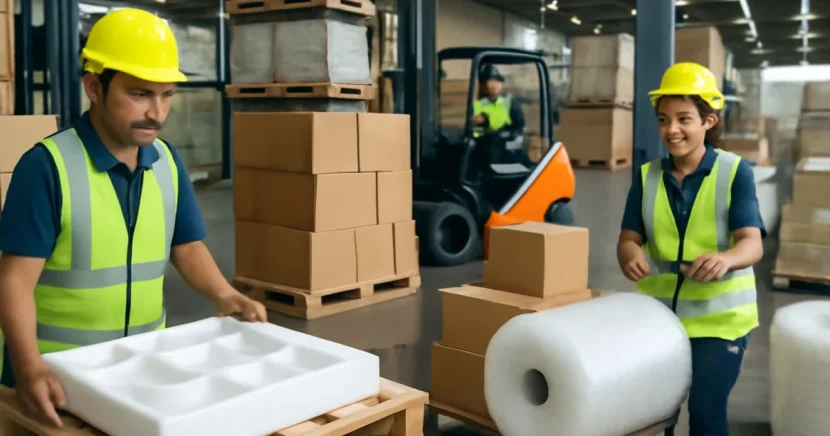
Industrial packaging is a critical element for Malaysian manufacturers and exporters who need to protect valuable products during storage, handling, and international shipping. With Malaysia’s dynamic manufacturing and export sectors, understanding the nuances of industrial packaging—ranging from material options to regulatory requirements—is essential for business success. In this comprehensive FAQ, we address the most common questions about Industrial Packaging Malaysia, providing clarity and actionable insights for industry professionals.
Why Is Industrial Packaging Important for Malaysian Manufacturers and Exporters?
Industrial packaging acts as the first line of defense against physical, environmental, and logistical risks. For manufacturers and exporters, especially those dealing with electronics, automotive components, fragile goods, or high-value products, packaging ensures safe transit and compliance with both domestic and international standards.
- Product Protection: Packaging cushions items against shock, vibration, and impact during transport and handling.
- Compliance: Proper packaging helps companies meet regulatory requirements such as ISPM 15 for wood packaging and various export documentation rules.
- Brand Image: High-quality packaging enhances brand perception and customer satisfaction.
- Operational Efficiency: Custom solutions can streamline packing processes, reduce material waste, and optimise logistics costs.
Without robust packaging, products are vulnerable to breakage, corrosion, moisture, and theft, all of which can lead to significant financial loss and reputational damage. As Malaysia increases its export volume and diversifies its manufacturing base, the role of industrial packaging becomes even more prominent.
What Types of Industrial Packaging Materials Are Commonly Used in Malaysia?
Malaysian manufacturers have access to a wide range of packaging materials, each chosen according to the product’s sensitivity, size, weight, and shipping conditions. The most common materials include:
- EPE & EPP Foam: Lightweight, shock-absorbing foam ideal for electronics, automotive and fragile parts.
- Paper Board: Single, double, and triple-wall corrugated boxes for versatile industrial use.
- Plastic Packaging: Corrugated and solid sheet plastic boxes and trays, often used for reusable and ESD-protective applications.
- Protective Bags & Wraps: LDPE, PVC, aluminium, antistatic, static-shielding, and moisture-barrier bags.
- Pallets: Wood, paper, or plastic pallets designed for load stability and international shipping requirements.
These materials can be combined for enhanced protection. For example, a sensitive circuit board may be first sealed in an antistatic bag, then cushioned with EPE foam, and finally placed in a heavy-duty corrugated box. Choosing the right combination optimises safety and cost-effectiveness.
Practical Example:
An electronics exporter in Penang may use custom EPE foam inserts within a triple-wall corrugated box, sealed in an antistatic bag, and shipped on a heat-treated wooden pallet to meet both product safety and export compliance standards.
Comparison Table: Common Packaging Materials in Malaysia
| Material | Best For | Key Benefits | Limitations |
|---|---|---|---|
| EPE/EPP Foam | Electronics, automotive, fragile goods | Shock absorption, lightweight, customisable | Not suitable for heavy loads |
| Corrugated Paper Board | General industrial goods | Recyclable, cost-effective, strong | Vulnerable to moisture |
| Plastic (PP/HDPE) | Reusable trays, ESD protection | Durable, moisture resistant, reusable | Higher upfront cost |
| Wooden Pallets | Heavy or export shipments | Strong, meets ISPM 15, stackable | Heavier, requires certification |
| Protective Bags & Wraps | Electronics, moisture/ESD sensitive items | Specialised protection (static, moisture) | Often used as part of a kit |
How Do I Choose the Right Packaging Solution for My Product?
Choosing the right packaging depends on your product type, handling and shipping environment, and specific protection needs. Here are actionable steps:
- Assess Product Characteristics: Consider fragility, weight, shape, and sensitivity to static or moisture.
- Identify Shipping & Storage Conditions: Factor in transit duration, climate, and potential handling risks.
- Select Materials & Design: Choose from foam, paper board, plastic, or hybrid kits. Custom fabrication ensures a precise fit and optimal protection.
- Test & Validate: Work with a provider that offers packaging design and prototyping to simulate real-world scenarios, checking for impact, vibration, and environmental resistance.
- Consider Regulatory Compliance: For exports, ensure packaging meets ISPM 15 or other destination-specific standards.
Beyond these steps, consider the following additional factors:
- Scalability: Ensure your packaging solution can be scaled up as your production volume grows.
- Ease of Handling: Choose packaging that simplifies loading, unloading, and internal movement.
- Cost vs. Value: Balance the cost of materials and customisation with the potential savings from reduced damage and improved efficiency.
Actionable Tip:
Engage a total solution provider like EPE Packaging to streamline the process from design and testing to production and delivery, ensuring all technical and regulatory needs are met under one roof.
Scenario Analysis: Electronics vs. Automotive Exporter
- Electronics Exporter: Requires ESD-safe materials, moisture barriers, and lightweight, custom foam inserts to protect sensitive components during air freight.
- Automotive Exporter: Needs heavy-duty pallets, robust corrugated boxes, and tailored foam or plastic trays for high-value, bulkier parts shipped by sea.
Tailoring your solution to your sector and product type is crucial for both compliance and cost control.
What Are the Key Regulations Affecting Industrial Packaging in Malaysia?
Regulatory compliance is a major concern for manufacturers and exporters. Key regulations include:
- ISPM 15: International standard for wood packaging materials (pallets, crates) requiring heat treatment or fumigation for export.
- Customs & Labelling: Packaging must often display country of origin, product details, and handling instructions.
- ESD & Antistatic Requirements: Electronics packaging often requires antistatic or ESD-safe materials to prevent component damage.
- Environmental Regulations: Growing emphasis on recyclable and reusable materials in line with sustainability goals.
Malaysian exporters should work closely with their packaging supplier to ensure compliance with both Malaysian and destination-country requirements. Non-compliance can lead to shipment delays, fines, or product returns.
Some industries may face additional standards related to environmental impact or sector-specific regulations. For example, the food industry must adhere to hygiene and contamination standards, while pharmaceuticals require tamper-evident and traceable packaging. Staying informed about regulatory updates is essential.
Checklist: Ensuring Regulatory Compliance
- Use ISPM 15-certified wood for all export pallets and crates.
- Ensure clear and accurate labeling of product, origin, and handling instructions.
- Choose ESD-safe packaging for electronic exports.
- Document all material sources and certifications for audit purposes.
- Stay updated on destination country regulations, especially for emerging markets.
How Does Quality Control (QC) Impact Industrial Packaging?
Quality control is essential to maintain packaging integrity and protect the product throughout its journey. Malaysian manufacturers should expect their packaging supplier to implement structured QC processes, including:
- Material Inspection: Ensuring all packaging components meet material and strength specifications.
- Production Checks: Monitoring fabrication and assembly for consistency and dimensional accuracy.
- Performance Testing: Conducting drop, compression, and vibration tests to validate protective capability.
- Documentation: Maintaining traceability of materials and finished packaging for audits and export compliance.
High-volume manufacturers and multinational operations should prioritise packaging partners with robust QC systems and the ability to scale production consistently.
It’s also important to establish clear acceptance criteria for all packaging, perform periodic audits, and review feedback from logistics teams and end customers. Ongoing improvements based on QC data can reduce costs, lower return rates, and boost customer satisfaction.
Case Study: Reducing Damage Rates
A major electronics exporter in Johor collaborated with a packaging provider to introduce rigorous QC at every stage—from raw material inspection to finished goods. As a result, their shipment damage rate dropped from 2% to less than 0.5% over six months, saving thousands in replacement costs and improving their reputation with overseas clients.
What Are the Benefits of Integrated Packaging Solutions?
Integrated packaging solutions combine multiple materials—foam, paper board, plastic, pallets, and accessories—into a single kit tailored to the customer’s needs. This approach offers several advantages:
- Simplified Sourcing: Reduces the complexity of dealing with multiple suppliers for different packaging components.
- Improved Efficiency: Pre-kitted solutions accelerate the packing process and reduce errors on the factory floor.
- Inventory Management: Supports Just-in-Time (JIT) and Vendor Managed Inventory (VMI) systems, minimising storage costs and ensuring timely supply.
- Consistent Quality: Ensures all packaging elements are designed and produced to the same high standards.
Integrated solutions are especially valuable for manufacturers shipping large volumes or dealing with complex product assemblies. By standardising packaging kits, companies can lower per-unit costs, simplify reordering, and ensure every shipment meets the same protection and compliance standards.
Example:
An automotive manufacturer might receive a complete packaging kit from EPE Packaging—custom foam inserts, paper partitions, plastic trays, and pallets—delivered on a JIT basis, ready for assembly line use.
Common Mistakes When Implementing Integrated Solutions
- Failing to involve all stakeholders (production, logistics, procurement) in the design phase.
- Overlooking the need for modularity or the ability to handle product variation.
- Not validating packaging kits under real handling and shipping conditions before large-scale rollout.
Addressing these issues early ensures a smoother transition and maximises the return on investment in integrated packaging.
Where Can I Find Reliable Industrial Packaging Suppliers in Malaysia?
Finding the right partner ensures not only quality and compliance but also ongoing support as business needs evolve. Leading suppliers like EPE Packaging offer:
- Custom Design & Prototyping: Tailored solutions for each product type.
- Local Production: Factories in Penang, Shah Alam, and Johor for rapid response and scalable output.
- Comprehensive Services: From material sourcing and QC to warehousing, recycling, and delivery.
- International Support: Access to a global packaging network through EPE International.
To get started, research local providers, review their client portfolios, and confirm their ability to deliver integrated solutions, quality control, and regulatory expertise. EPE Packaging stands as a leading example, offering a full spectrum of industrial packaging services to support Malaysia’s manufacturing and export sectors.
For more insights on selecting the best partner, see our related article: The Importance Of Choosing The Right Packaging Supplier In Malaysia.
Checklist: Evaluating a Packaging Supplier
- Does the supplier offer in-house design, prototyping, and testing?
- Are they experienced with your product type and industry?
- Do they provide reliable delivery and after-sales support?
- Can they scale with your business as your needs change?
- Will they help you navigate compliance and sustainability goals?
How Can I Ensure My Packaging Is Ready for Export?
Exporters must take extra steps to ensure packaging withstands the rigours of international shipping and meets all relevant regulations. Here’s a checklist:
- Comply with ISPM 15: Use heat-treated or fumigated wood for pallets and crates.
- Label Clearly: Include all required markings and documentation for customs clearance.
- Choose Protective Materials: Use moisture-barrier bags, antistatic wraps, and sturdy outer cartons as needed.
- Partner with Experts: Engage packaging suppliers with experience in export requirements and global logistics.
Regularly review shipping feedback and update packaging designs in response to real-world conditions and damage reports to ensure continuous improvement.
It’s also advisable to conduct export readiness audits, simulate international transit conditions, and keep abreast of changes in customs requirements for your target markets. Establishing a process for collecting and responding to shipping damage feedback will help you maintain high standards and reduce costly delays or product losses.
Proactive Steps for Export Success
- Develop sample shipments and run a pilot export to test packaging integrity.
- Work with freight forwarders to confirm compatibility with their handling systems.
- Document all packaging and shipping protocols for future reference and staff training.
Conclusion: Getting Industrial Packaging Right in Malaysia
Industrial packaging in Malaysia is more than just boxes and wraps—it’s a strategic component of manufacturing and export success. By understanding the available materials, regulations, QC processes, and benefits of integrated solutions, companies can protect their products, meet international standards, and optimise their supply chain.
Whether you are seeking custom foam inserts, reusable plastic trays, high-strength paper board boxes, or a complete integrated packaging solution, working with an experienced partner like EPE Packaging can streamline your operations and ensure peace of mind. For further reading on protective packaging strategies, see our article 4 Main Reasons Why You Should Start Using Protective Packaging In Shipping.
Frequently Asked Questions
Where can I get industrial packaging boxes and supplies near me in Malaysia?
You can source industrial packaging boxes and supplies from reputable Malaysian providers such as EPE Packaging, which has factories in Penang, Shah Alam, and Johor. These suppliers offer a wide range of solutions, including EPE foam, paper board boxes, plastic trays, and pallets. It’s best to choose a supplier that provides custom design, prototyping, and integrated packaging services tailored to your specific industry and shipping needs.
What packaging materials are best for protecting electronic components during export?
For electronics, the best packaging materials are EPE or EPP foam inserts for shock absorption, antistatic or static-shielding bags to prevent electrostatic discharge, and sturdy outer cartons to protect against environmental and physical impact. Using these materials in combination ensures components remain safe throughout storage and international shipping. Leading suppliers in Malaysia can customize these solutions for both small and large-scale export requirements.
How can I ensure my packaging meets international export regulations?
To comply with international export regulations, use ISPM 15-certified wood pallets and crates, ensure all packaging materials are properly labelled, and select protective materials that address the specific requirements of the destination country. Partnering with an experienced packaging supplier will help you navigate regulatory standards, documentation, and quality control processes to prevent delays or rejections at customs.
What are the advantages of using integrated packaging solutions?
Integrated packaging solutions combine materials such as foam, paper board, plastic trays, and pallets into a single kit designed for your specific products. This approach simplifies sourcing, reduces packing time, ensures consistent quality, and supports inventory management systems like Just-in-Time (JIT) and Vendor Managed Inventory (VMI). It is especially beneficial for high-volume manufacturers and exporters with complex packaging needs.
How does quality control in packaging impact product safety and export success?
Effective quality control in packaging ensures that all materials and finished packages meet strict standards for strength, protection, and compliance. This minimises the risk of product damage, reduces returns, and increases the likelihood of smooth customs clearance. Reliable suppliers conduct material inspections, production checks, and performance testing, helping you achieve consistent results across every shipment.
Ready to Upgrade Your Industrial Packaging in Malaysia?
Whether you need custom EPE foam inserts, reusable plastic trays, paper board boxes, or a complete integrated packaging solution for your manufacturing or export business, EPE Packaging is your trusted partner in Malaysia. With over 30 years of experience, comprehensive QC, and local production facilities, we deliver total packaging solutions tailored to your needs. Simplify sourcing, ensure compliance, and protect your products every step of the way.
Industrial packaging is a critical element for Malaysian manufacturers and exporters who need to protect valuable products during storage, handling, and international shipping. With Malaysia’s dynamic manufacturing and export sectors, understanding the nuances of industrial packaging—ranging from material options to regulatory requirements—is essential for business success. In this comprehensive FAQ, we address the most common questions about Industrial Packaging Malaysia, providing clarity and actionable insights for industry professionals.
Why Is Industrial Packaging Important for Malaysian Manufacturers and Exporters?
Industrial packaging acts as the first line of defense against physical, environmental, and logistical risks. For manufacturers and exporters, especially those dealing with electronics, automotive components, fragile goods, or high-value products, packaging ensures safe transit and compliance with both domestic and international standards.
- Product Protection: Packaging cushions items against shock, vibration, and impact during transport and handling.
- Compliance: Proper packaging helps companies meet regulatory requirements such as ISPM 15 for wood packaging and various export documentation rules.
- Brand Image: High-quality packaging enhances brand perception and customer satisfaction.
- Operational Efficiency: Custom solutions can streamline packing processes, reduce material waste, and optimise logistics costs.
Without robust packaging, products are vulnerable to breakage, corrosion, moisture, and theft, all of which can lead to significant financial loss and reputational damage. As Malaysia increases its export volume and diversifies its manufacturing base, the role of industrial packaging becomes even more prominent.
What Types of Industrial Packaging Materials Are Commonly Used in Malaysia?
Malaysian manufacturers have access to a wide range of packaging materials, each chosen according to the product’s sensitivity, size, weight, and shipping conditions. The most common materials include:
- EPE & EPP Foam: Lightweight, shock-absorbing foam ideal for electronics, automotive and fragile parts.
- Paper Board: Single, double, and triple-wall corrugated boxes for versatile industrial use.
- Plastic Packaging: Corrugated and solid sheet plastic boxes and trays, often used for reusable and ESD-protective applications.
- Protective Bags & Wraps: LDPE, PVC, aluminium, antistatic, static-shielding, and moisture-barrier bags.
- Pallets: Wood, paper, or plastic pallets designed for load stability and international shipping requirements.
These materials can be combined for enhanced protection. For example, a sensitive circuit board may be first sealed in an antistatic bag, then cushioned with EPE foam, and finally placed in a heavy-duty corrugated box. Choosing the right combination optimises safety and cost-effectiveness.
Practical Example:
An electronics exporter in Penang may use custom EPE foam inserts within a triple-wall corrugated box, sealed in an antistatic bag, and shipped on a heat-treated wooden pallet to meet both product safety and export compliance standards.
Comparison Table: Common Packaging Materials in Malaysia
| Material | Best For | Key Benefits | Limitations |
|---|---|---|---|
| EPE/EPP Foam | Electronics, automotive, fragile goods | Shock absorption, lightweight, customisable | Not suitable for heavy loads |
| Corrugated Paper Board | General industrial goods | Recyclable, cost-effective, strong | Vulnerable to moisture |
| Plastic (PP/HDPE) | Reusable trays, ESD protection | Durable, moisture resistant, reusable | Higher upfront cost |
| Wooden Pallets | Heavy or export shipments | Strong, meets ISPM 15, stackable | Heavier, requires certification |
| Protective Bags & Wraps | Electronics, moisture/ESD sensitive items | Specialised protection (static, moisture) | Often used as part of a kit |
How Do I Choose the Right Packaging Solution for My Product?
Choosing the right packaging depends on your product type, handling and shipping environment, and specific protection needs. Here are actionable steps:
- Assess Product Characteristics: Consider fragility, weight, shape, and sensitivity to static or moisture.
- Identify Shipping & Storage Conditions: Factor in transit duration, climate, and potential handling risks.
- Select Materials & Design: Choose from foam, paper board, plastic, or hybrid kits. Custom fabrication ensures a precise fit and optimal protection.
- Test & Validate: Work with a provider that offers packaging design and prototyping to simulate real-world scenarios, checking for impact, vibration, and environmental resistance.
- Consider Regulatory Compliance: For exports, ensure packaging meets ISPM 15 or other destination-specific standards.
Beyond these steps, consider the following additional factors:
- Scalability: Ensure your packaging solution can be scaled up as your production volume grows.
- Ease of Handling: Choose packaging that simplifies loading, unloading, and internal movement.
- Cost vs. Value: Balance the cost of materials and customisation with the potential savings from reduced damage and improved efficiency.
Actionable Tip:
Engage a total solution provider like EPE Packaging to streamline the process from design and testing to production and delivery, ensuring all technical and regulatory needs are met under one roof.
Scenario Analysis: Electronics vs. Automotive Exporter
- Electronics Exporter: Requires ESD-safe materials, moisture barriers, and lightweight, custom foam inserts to protect sensitive components during air freight.
- Automotive Exporter: Needs heavy-duty pallets, robust corrugated boxes, and tailored foam or plastic trays for high-value, bulkier parts shipped by sea.
Tailoring your solution to your sector and product type is crucial for both compliance and cost control.
What Are the Key Regulations Affecting Industrial Packaging in Malaysia?
Regulatory compliance is a major concern for manufacturers and exporters. Key regulations include:
- ISPM 15: International standard for wood packaging materials (pallets, crates) requiring heat treatment or fumigation for export.
- Customs & Labelling: Packaging must often display country of origin, product details, and handling instructions.
- ESD & Antistatic Requirements: Electronics packaging often requires antistatic or ESD-safe materials to prevent component damage.
- Environmental Regulations: Growing emphasis on recyclable and reusable materials in line with sustainability goals.
Malaysian exporters should work closely with their packaging supplier to ensure compliance with both Malaysian and destination-country requirements. Non-compliance can lead to shipment delays, fines, or product returns.
Some industries may face additional standards related to environmental impact or sector-specific regulations. For example, the food industry must adhere to hygiene and contamination standards, while pharmaceuticals require tamper-evident and traceable packaging. Staying informed about regulatory updates is essential.
Checklist: Ensuring Regulatory Compliance
- Use ISPM 15-certified wood for all export pallets and crates.
- Ensure clear and accurate labeling of product, origin, and handling instructions.
- Choose ESD-safe packaging for electronic exports.
- Document all material sources and certifications for audit purposes.
- Stay updated on destination country regulations, especially for emerging markets.
How Does Quality Control (QC) Impact Industrial Packaging?
Quality control is essential to maintain packaging integrity and protect the product throughout its journey. Malaysian manufacturers should expect their packaging supplier to implement structured QC processes, including:
- Material Inspection: Ensuring all packaging components meet material and strength specifications.
- Production Checks: Monitoring fabrication and assembly for consistency and dimensional accuracy.
- Performance Testing: Conducting drop, compression, and vibration tests to validate protective capability.
- Documentation: Maintaining traceability of materials and finished packaging for audits and export compliance.
High-volume manufacturers and multinational operations should prioritise packaging partners with robust QC systems and the ability to scale production consistently.
It’s also important to establish clear acceptance criteria for all packaging, perform periodic audits, and review feedback from logistics teams and end customers. Ongoing improvements based on QC data can reduce costs, lower return rates, and boost customer satisfaction.
Case Study: Reducing Damage Rates
A major electronics exporter in Johor collaborated with a packaging provider to introduce rigorous QC at every stage—from raw material inspection to finished goods. As a result, their shipment damage rate dropped from 2% to less than 0.5% over six months, saving thousands in replacement costs and improving their reputation with overseas clients.
What Are the Benefits of Integrated Packaging Solutions?
Integrated packaging solutions combine multiple materials—foam, paper board, plastic, pallets, and accessories—into a single kit tailored to the customer’s needs. This approach offers several advantages:
- Simplified Sourcing: Reduces the complexity of dealing with multiple suppliers for different packaging components.
- Improved Efficiency: Pre-kitted solutions accelerate the packing process and reduce errors on the factory floor.
- Inventory Management: Supports Just-in-Time (JIT) and Vendor Managed Inventory (VMI) systems, minimising storage costs and ensuring timely supply.
- Consistent Quality: Ensures all packaging elements are designed and produced to the same high standards.
Integrated solutions are especially valuable for manufacturers shipping large volumes or dealing with complex product assemblies. By standardising packaging kits, companies can lower per-unit costs, simplify reordering, and ensure every shipment meets the same protection and compliance standards.
Example:
An automotive manufacturer might receive a complete packaging kit from EPE Packaging—custom foam inserts, paper partitions, plastic trays, and pallets—delivered on a JIT basis, ready for assembly line use.
Common Mistakes When Implementing Integrated Solutions
- Failing to involve all stakeholders (production, logistics, procurement) in the design phase.
- Overlooking the need for modularity or the ability to handle product variation.
- Not validating packaging kits under real handling and shipping conditions before large-scale rollout.
Addressing these issues early ensures a smoother transition and maximises the return on investment in integrated packaging.
Where Can I Find Reliable Industrial Packaging Suppliers in Malaysia?
Finding the right partner ensures not only quality and compliance but also ongoing support as business needs evolve. Leading suppliers like EPE Packaging offer:
- Custom Design & Prototyping: Tailored solutions for each product type.
- Local Production: Factories in Penang, Shah Alam, and Johor for rapid response and scalable output.
- Comprehensive Services: From material sourcing and QC to warehousing, recycling, and delivery.
- International Support: Access to a global packaging network through EPE International.
To get started, research local providers, review their client portfolios, and confirm their ability to deliver integrated solutions, quality control, and regulatory expertise. EPE Packaging stands as a leading example, offering a full spectrum of industrial packaging services to support Malaysia’s manufacturing and export sectors.
For more insights on selecting the best partner, see our related article: The Importance Of Choosing The Right Packaging Supplier In Malaysia.
Checklist: Evaluating a Packaging Supplier
- Does the supplier offer in-house design, prototyping, and testing?
- Are they experienced with your product type and industry?
- Do they provide reliable delivery and after-sales support?
- Can they scale with your business as your needs change?
- Will they help you navigate compliance and sustainability goals?
How Can I Ensure My Packaging Is Ready for Export?
Exporters must take extra steps to ensure packaging withstands the rigours of international shipping and meets all relevant regulations. Here’s a checklist:
- Comply with ISPM 15: Use heat-treated or fumigated wood for pallets and crates.
- Label Clearly: Include all required markings and documentation for customs clearance.
- Choose Protective Materials: Use moisture-barrier bags, antistatic wraps, and sturdy outer cartons as needed.
- Partner with Experts: Engage packaging suppliers with experience in export requirements and global logistics.
Regularly review shipping feedback and update packaging designs in response to real-world conditions and damage reports to ensure continuous improvement.
It’s also advisable to conduct export readiness audits, simulate international transit conditions, and keep abreast of changes in customs requirements for your target markets. Establishing a process for collecting and responding to shipping damage feedback will help you maintain high standards and reduce costly delays or product losses.
Proactive Steps for Export Success
- Develop sample shipments and run a pilot export to test packaging integrity.
- Work with freight forwarders to confirm compatibility with their handling systems.
- Document all packaging and shipping protocols for future reference and staff training.
Conclusion: Getting Industrial Packaging Right in Malaysia
Industrial packaging in Malaysia is more than just boxes and wraps—it’s a strategic component of manufacturing and export success. By understanding the available materials, regulations, QC processes, and benefits of integrated solutions, companies can protect their products, meet international standards, and optimise their supply chain.
Whether you are seeking custom foam inserts, reusable plastic trays, high-strength paper board boxes, or a complete integrated packaging solution, working with an experienced partner like EPE Packaging can streamline your operations and ensure peace of mind. For further reading on protective packaging strategies, see our article 4 Main Reasons Why You Should Start Using Protective Packaging In Shipping.
Practical Preparation Before Execution
Before moving forward, document the target audience, budget range, delivery standards, and owner for every important action. Start with a controlled small-scale test, record quality, timing, exceptions, and customer feedback, and expand only when the evidence supports it.
- Confirm requirements, specifications, quantities, and acceptance criteria.
- Keep quotation, sample, delivery, and support records together.
- Assign an owner and a clear review date.
- Adjust the plan when sales or inventory signals change.
Reducing Execution Risk
A dependable process anticipates delays, quality variation, excess inventory, and communication gaps. Define alternatives for critical steps and agree on the conditions that require a pause or review. After each cycle, compare cost, handling time, returns, and customer feedback so the next improvement is based on evidence.
Improving from Measured Results
Review performance across channels, audience groups, and time periods instead of relying on one headline result. Turn successful practices into repeatable steps while keeping enough flexibility to respond to market changes and new information.
Frequently Asked Questions
Where can I get industrial packaging boxes and supplies near me in Malaysia?
You can source industrial packaging boxes and supplies from reputable Malaysian providers such as EPE Packaging, which has factories in Penang, Shah Alam, and Johor. These suppliers offer a wide range of solutions, including EPE foam, paper board boxes, plastic trays, and pallets. It’s best to choose a supplier that provides custom design, prototyping, and integrated packaging services tailored to your specific industry and shipping needs.
What packaging materials are best for protecting electronic components during export?
For electronics, the best packaging materials are EPE or EPP foam inserts for shock absorption, antistatic or static-shielding bags to prevent electrostatic discharge, and sturdy outer cartons to protect against environmental and physical impact. Using these materials in combination ensures components remain safe throughout storage and international shipping. Leading suppliers in Malaysia can customize these solutions for both small and large-scale export requirements.
How can I ensure my packaging meets international export regulations?
To comply with international export regulations, use ISPM 15-certified wood pallets and crates, ensure all packaging materials are properly labelled, and select protective materials that address the specific requirements of the destination country. Partnering with an experienced packaging supplier will help you navigate regulatory standards, documentation, and quality control processes to prevent delays or rejections at customs.
What are the advantages of using integrated packaging solutions?
Integrated packaging solutions combine materials such as foam, paper board, plastic trays, and pallets into a single kit designed for your specific products. This approach simplifies sourcing, reduces packing time, ensures consistent quality, and supports inventory management systems like Just-in-Time (JIT) and Vendor Managed Inventory (VMI). It is especially beneficial for high-volume manufacturers and exporters with complex packaging needs.
How does quality control in packaging impact product safety and export success?
Effective quality control in packaging ensures that all materials and finished packages meet strict standards for strength, protection, and compliance. This minimises the risk of product damage, reduces returns, and increases the likelihood of smooth customs clearance. Reliable suppliers conduct material inspections, production checks, and performance testing, helping you achieve consistent results across every shipment.
Ready to Upgrade Your Industrial Packaging in Malaysia?
Whether you need custom EPE foam inserts, reusable plastic trays, paper board boxes, or a complete integrated packaging solution for your manufacturing or export business, EPE Packaging is your trusted partner in Malaysia. With over 30 years of experience, comprehensive QC, and local production facilities, we deliver total packaging solutions tailored to your needs. Simplify sourcing, ensure compliance, and protect your products every step of the way.